












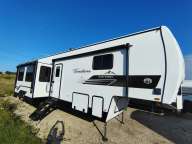
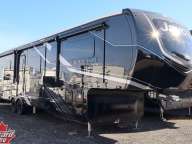

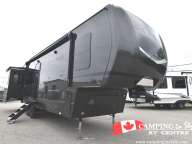
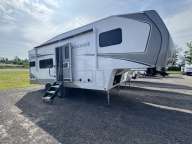


A fifth wheel can make weekends away feel more like home. Before choosing the floor plan, though, check what your truck can safely carry and tow. The right match depends on the loaded trailer and the exact truck configuration. A model badge or advertised maximum towing figure cannot tell the whole story.
Start with the Trailer After You Pack
Use the trailer’s expected loaded weight when matching a truck. Dry weight leaves out the belongings and supplies you add for a trip. Water, camping equipment and luggage need room in your calculations.
If you have not weighed the trailer, its gross vehicle weight rating provides a starting point for planning. This is its maximum permitted loaded weight. Confirm actual weights at a suitable scale before travelling with your completed setup.
The Weight in the Bed Matters
A fifth wheel transfers weight through its hitch into the truck bed. This is called pin weight, and it uses part of the truck’s payload capacity. Passengers, the hitch itself and cargo also count.
For illustration, suppose your loaded trailer places 1,000 kg on the hitch. Add a 90 kg hitch, 250 kg of passengers and 100 kg of gear. Together, those items require 1,440 kg of payload. This example is arithmetic, not a recommended trailer match. Your actual weights and vehicle ratings decide what works.
Which Trucks Belong on Your Shortlist?
Ford F 250 and F 350 pickups are starting points because Ford publishes specific fifth wheel ratings for their configurations. Ram 3500 is another Canadian market option to investigate. Larger fifth wheels may call for a truck with dual rear wheels, depending on payload and axle requirements.
Some lighter fifth wheels may suit a properly equipped F 150. Ford includes fifth wheel towing guidance for that truck too. Never assume that every truck within one model range has the same capability. Engine, cab, box, axle ratio and options affect the answer.
The Hitch Package Is Only Part of the Setup
Confirm that the truck accepts the correct fifth wheel hitch. An available factory preparation package should not be confused with an installed hitch. Check hitch ratings and compatibility before purchasing either vehicle.
Bed length and turning clearance deserve attention. Have the truck, hitch and trailer combination checked for cab, tailgate and bed rail clearance. A setup that connects still needs enough space to turn and travel correctly.
Check More Than One Limit
Stay within the truck’s towing rating, gross vehicle weight rating, axle ratings and gross combined weight rating. Tire and hitch limits matter too. Extra engine power does not increase those ratings.
For trips from Edmonton toward mountain campgrounds, discuss grades and trailer braking when reviewing your combination. The route belongs in the conversation alongside weight.
Bring the Truck Details. We Will Start There.
Visit Pulse RV with your truck’s labels and configuration details. Our team can help explore fifth wheels that suit your plans and discuss confirming a compatible towing setup.
