












RVing from 1941 to 1950
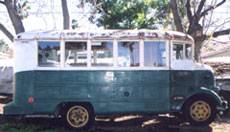
1940, Howard Hughes Bus
Photo courtesy: John Agnew, >www.funkyjunkfarms.com
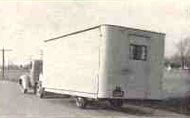
1942, Palace Expando
Source: Atlas Mobile Home Directory
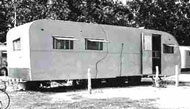
1944, New Moon
Source: Atlas Mobile Home Directory
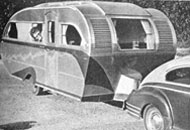
1946, Airfloat
Source: Atlas Mobile Home Directory
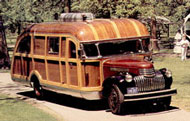
1946, Wooden Motor Home
Source: Atlas Mobile Home Directory
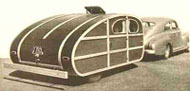
1947, Cabin Car
Source: Atlas Mobile Home Directory
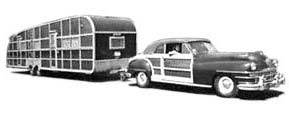
1947, Shoreland Tandem
Source: www.meff.nl
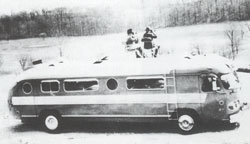
1947, Flexible Bus conversion
Source: National Archives of Canada
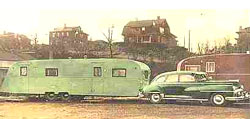
1947, Redman Trailer Coach
Source: Atlas Mobile Home Directory
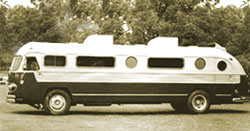
1948, Land Cruiser Coach
Source: Unknown
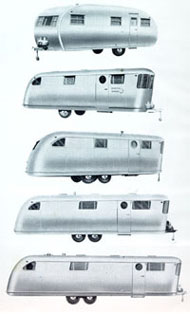
1949, Spartans
Source: www.meff.nl
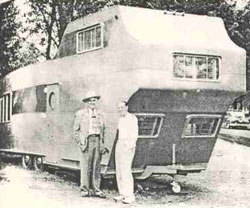
1950, Boyer Phaeton
Source: Atlas Mobile Home Directory
The growth of the RV industry halted during World War II. Trailers began to serve different functions as housing for war workers. When it resumed, the manufacturers began to build house cars, what were truly motorized versions of their trailers. This changed the world of recreational vehicles nearly overnight. The future of the motorhome was assured as recognized manufacturers began to make them available even though they were still quite prohibitive in price.
The Howard Hughes bus was built in 1940 by Howard Hughes, legendary movie producer and director. It is one of eight buses he built when he was with RKO Studios. They served as his mobile dressing rooms for location filming. The bus has a mahogany interior equipped with a full instrumental dash board, airplane seats, bathroom with toilet and shower, electric refrigerator, stove, oven, swamp cooler, air conditioning and a generator for the remote desert and mountain locations.
In 1942 the Palace Corporation came out with a revolutionay new type of trailer, one that expanded out on both sides. The model featured four rooms and a shower bath. The US Army purchased thousands of these models as base housing for the enlisted men and their families.
In 1944 the Redman Trailer Company from Alma, Michigan was producing the New Moon line of trailers and claimed that they were the world's largest trailers. These trailers were to be available as housing for the bonafide war workers.
The 1946 Airfloat Trailer was entirely constructed of aluminum. Aerodynamic principles combined with streamline design are the features of the trailer.
A fascinating 1946 Chevrolet wooden motor home, this vehicle was owner-built from a new chassis. It attracted so much attention on the road that vacation travel was hampered by all of the people gawking and asking questions.
All wood trailers had really attractive profiles and pleasing construction. With wheels well to the rear - at a guess, they would put one quarter to one third of their weight on the hitch and the remainder on their wheels.
In 1947, Streamlite Trailer Company from Illinois, offered a really nice 30 foot long trailer called 'Shoreland Tandem Town and Country' with various hardwoods, chromimum hardware and electric light fixtures and even boasted extra insulation. The trailer had 3 rooms and was a great attraction back in 1947. Many of its innovative features later became industry standards. Donald Hamm designed this 30-footer to match Chrysler's own Country woodie.
The Flxible bus converted into a motor home with two bird watchers on the roof.
From 1944 to 1953, Redman Trailer Company (Alma, Michigan) developed New Moon, a significantly longer line of trailers than others in the industry. In 1947, this trailer was "the world's largest trailer". In response to the success of its New Moon units, the company took the name New Moon Homes.
In 1948, the Flxible Bus Company began a division making Land Cruiser custom coaches. This division was sold to Miles Elmers of Columbus, Ohio, in 1955 and renamed Custom Coach Corporation, which still converts bus chassis today. The custom built Flexible Land Cruiser wasbuilt as a unit on it's own chassis and completely outfited for away from home living. The coach was completly self contained with it's own motor driven 110 volt electrical system, air conditioning, hot and cold runing water, complete electric galley with refrigerator, fresh store locker and shower with toilet facilities. The spacious accommodations could comfortably sleep six. Also featured was rear storage along with front and rear exits for added safety.
From 1946 to 1959 Spartan Aircraft Company, famous since 1928 for luxury aircraft, had a very extensive line of all-aluminium trailers with 19 models. The largest reaching 10 feet wide by 50 feet long. They used building techniques and designs that they had mastered in the aircraft building industry. The trailers had a modern look with many deco design elements. They were furnished in the latest of styles from couches to window coverings.
In 1949, Spartans offered five models. The smallest Spartanette was 25 feet long. The Spartan Manor was 26 feet long. The next size was the 26 foot Manor Tandem. Spartan Mansion was 30 feet long and Spartan Royal Mansion as 33 feet long.
 Advertisement
RV History 
Did You Know 
World's worst drivers? The record for the worst driver is tied between 2 candidates; first a 75-year-old man who received 10 traffic tickets, drove on the wrong side of the road 4 times, committed 4 hit-and-run offenses, and caused 6 accidents, all within 20 minutes on October 15, 1966. Second, a 62-year-old woman who failed her driving test 40 times before passing it in August, 1970. By that time, she had spent over $700 in lessons and could no longer afford to buy a car.